
1. Policy statement
The Discalced Carmelite Friars of the Anglo-Irish Province will do everything in our power to keep every young adult who takes part in our ministry safe from harm, and to respond promptly and openly when concerns arise. This policy applies that commitment to the Young Adult Ministry and sits beneath the Province’s overarching safeguarding policy, which states the Order’s intention to safeguard the welfare of children, young people and adults at risk to whom we minister (Province safeguarding statement).
We hold that every person is created in the image of God and has an inherent right to dignity and bodily integrity. St Teresa asked that in her houses “all must be friends, all must be helped, all must be loved”; a Carmelite community that welcomes young adults into prayer must therefore be a place where trust is never exploited. Prayer, spiritual accompaniment and retreat create closeness and openness. That is their grace, and it is also why clear boundaries matter.
We commit to:
- a culture in which safeguarding is everyone’s responsibility, and concerns can be raised without fear;
- safer recruitment, training and supervision of all who lead;
- planning every activity with its risks in mind;
- listening to, believing and supporting anyone who discloses harm, and reporting without delay;
- following the ‘One Church’ approach of the Catholic Church in England and Wales, and the Church’s safeguarding standards in Ireland where they apply.
2. Scope
This policy covers every activity of the Young Adult Ministry, wherever it takes place, and everyone who leads, helps or takes part.
People covered: friars, other clergy and religious assisting the ministry, lay leaders and volunteers, visiting speakers, retreat-givers, and all participants.
Participants: the ministry is for young adults aged 18 to 35. People under 18 may attend only by exception, with written parental consent and the arrangements in section 8.6.
| Activity | Where | Frequency | Main safeguarding features |
| Living Flame | Kensington | Weekly | Regular evening gathering; prayer, talk, social time; travel home after dark |
| Young adult meetings | Oxford and Gerrards Cross | Occasional | Hosted in our communities; visiting groups; venue checks |
| Advent Retreat | A chosen venue: our communities in Kensington, Oxford or Gerrards Cross, or another retreat centre | Annual | Residential or day; accommodation; confession and spiritual direction |
| Lenten Retreat | As for Advent Retreat | Annual | As above |
| Pilgrimages | UK and abroad | As arranged | Travel, overnight stays, overseas risks, insurance, emergencies |
Online activity connected with the ministry (group chats, social media, livestreams, online prayer) is also covered (section 10).
3. Legal and Church framework
All ministry activity in England follows the eight National Safeguarding Standards of the Catholic Church in England and Wales, audited by the Catholic Safeguarding Standards Agency (CSSA). The leadership of the Church in England and Wales adopted these standards for children and for adults who may be vulnerable or at risk, and compliance is tested through CSSA audit (National Safeguarding Standards). Religious congregations are supported in casework and training by the Religious Life Safeguarding Service (RLSS) (ICN report on RLSS).
Church framework
- CSSA National Safeguarding Standards (England and Wales) and the Province’s own safeguarding policy and procedures.
- Guidance of the RLSS, or the Province’s safeguarding provider, on casework, recruitment and training.
- Local diocesan arrangements where we minister: Westminster (Kensington), Birmingham (Oxford) and Northampton (Gerrards Cross).
- In Ireland, or for activities run with the Irish Region: Safeguarding Children: Policy and Standards for the Catholic Church in Ireland 2016 and the guidance of the National Board for Safeguarding Children in the Catholic Church in Ireland (NBSCCCI), which the Order follows there (OCD Ireland safeguarding).
Statutory framework (England)
- Care Act 2014: the duty to report concerns about adults at risk to the local authority.
- Children Act 1989 and 2004, and Working Together to Safeguard Children (statutory guidance), for any participant under 18.
- Safeguarding Vulnerable Groups Act 2006 and Protection of Freedoms Act 2012: DBS checks and barring.
- Sexual Offences Act 2003, as amended in 2022: a person in a position of trust in a religious setting commits an offence by sexual activity with a 16- or 17-year-old in their care.
- Data Protection Act 2018 and UK GDPR: handling personal and safeguarding information.
- Health and Safety at Work etc. Act 1974 and the Equality Act 2010.
On pilgrimages abroad, this policy still applies in full, alongside the laws of the host country.
4. Definitions
Young adult: a participant aged 18 to 35. Young adults are capable adults; we respect their autonomy and their right to make their own decisions.
Child: anyone under 18.
Adult at risk: an adult who has needs for care and support, is experiencing or at risk of abuse or neglect, and cannot protect themselves because of those needs (Care Act 2014). Any young adult may become temporarily vulnerable, for example through bereavement, mental ill-health, a crisis of faith or vocation, or dependence on a person in spiritual authority.
Leader: anyone who leads, organises, helps or speaks at a ministry activity, whether friar, religious, priest, employee or volunteer.
Forms of abuse we watch for include:
- physical, sexual and emotional or psychological abuse;
- spiritual abuse and abuse of power: using religious authority, spiritual direction or the language of obedience and discernment to control, coerce, isolate or silence;
- grooming: building trust or dependence in order to exploit;
- financial or material abuse, including pressure to give money;
- discriminatory abuse, harassment and bullying, in person or online;
- coercive control, domestic abuse, modern slavery and self-neglect, which may come to light through the ministry even when they happen elsewhere.
5. Roles and responsibilities
The Provincial holds ultimate responsibility; day-to-day safeguarding sits with the Young Adult Ministry Coordinator and the Ministry Safeguarding Representative, who must be different people.
| Role | Responsibilities |
| Provincial and Council | Approve this policy; ensure resources, insurance and audit; receive annual safeguarding report; act on allegations against friars |
| Provincial Safeguarding Lead | Receives all concerns; liaises with RLSS, statutory agencies and police; keeps case records; advises on risk |
| Local Safeguarding Lead (each community) | Safeguarding in our houses at Kensington, Oxford and Gerrards Cross, including when they host ministry events or retreats |
| Young Adult Ministry Coordinator | Plans activities and risk assessments; recruits and supervises leaders; keeps attendance and consent records; ensures this policy is known and followed |
| Ministry Safeguarding Representative (lay, where possible) | First point of contact at events; named on all publicity; passes concerns to the Provincial Safeguarding Lead the same day |
| Lead for each event | Ensures ratios, venue checks, first aid and emergency plan are in place; briefs the team |
| All leaders and volunteers | Follow the code of conduct; complete training; report every concern |
| Participants | Treat others with respect; follow the participant agreement; speak up about concerns |
6. Safer recruitment
No one leads in the Young Adult Ministry until they have completed safer recruitment, signed the code of conduct and done basic safeguarding training. The process follows the Province’s and RLSS safer recruitment procedures.
- Role description and person specification for every leadership role.
- Application form with a self-declaration about criminal records and safeguarding concerns.
- Interview or structured conversation, including questions on boundaries and safeguarding.
- Two references, at least one from someone who has seen the person in a pastoral or leadership role.
- Identity check and an Enhanced DBS check, renewed every three years (or via the DBS Update Service). For leaders from Ireland, Garda vetting as appropriate.
- For visiting priests and religious: a letter of good standing (celebret or equivalent) from their Ordinary or Superior.
- Signed code of conduct, induction and basic safeguarding training.
- A settling-in period with supervision and a review after six months.
Visiting speakers who are never alone with participants need not have a DBS check, but they are briefed on this policy and accompanied throughout.
7. Code of conduct for leaders
Leaders hold a position of trust, and the power difference does not vanish because participants are adults. Every leader signs this code each year.
Leaders will:
- treat every participant with respect, regardless of age, sex, race, disability, background or belief;
- keep conversations and meetings in open or visible places, or with another leader aware;
- respect a person’s freedom to leave, disagree, decline to share or stop attending, without pressure;
- encourage participants’ friendships, family ties and other sources of support;
- keep the ministry’s purpose in view: prayer, formation, community and discernment;
- report any concern, including about a colleague or friar, using section 11.
Leaders will not:
- pursue a romantic or sexual relationship with a participant, or behave in ways that could be read as such;
- give or invite gifts, loans or money beyond the token and transparent;
- serve alcohol at ministry events without the Coordinator’s agreement, serve it to anyone under 18, or drink beyond moderation while responsible for others; illegal drugs are never permitted;
- meet a participant alone in a private room or bedroom, or invite them to their own living quarters;
- share a bedroom with a participant, or enter participants’ bedrooms except in an emergency;
- touch anyone in a way that is unwanted, or that is more than brief and appropriate;
- use spiritual authority to direct major life choices, demand secrecy, or discourage someone from seeking advice elsewhere;
- promise confidentiality about harm (see section 11);
- use offensive language, humiliate, bully or favour particular individuals.
A breach may lead to removal from ministry, and to referral under section 11.
8. Activity arrangements
Every activity has a written risk assessment, at least two vetted leaders present, and a named safeguarding contact announced at the start.
8.1 Living Flame, Kensington (weekly)
- At least two vetted leaders present for the whole evening, one of them the safeguarding contact for that night.
- A sign-in record (name and contact details) kept securely; first-time attenders welcomed and briefed on where to raise concerns.
- Safeguarding poster with contacts displayed in the meeting space; fire exits, first aid kit and first aider identified.
- Leaders stay until the last participant has left; participants encouraged to travel home together after dark.
- No participant goes into the friars’ enclosure or private quarters.
- Annual review of the Living Flame risk assessment with the Kensington Local Safeguarding Lead.
8.2 Occasional meetings, Oxford and Gerrards Cross
- The event lead agrees the date, rooms and arrangements with the Prior or Local Safeguarding Lead of the hosting community beforehand.
- Risk assessment covers venue, travel between sites and any shared transport.
- Leaders who drive participants hold a valid licence and insurance for that use; no leader drives a single participant alone where it can be avoided.
8.3 Advent and Lenten Retreats
Whether held in one of our communities (Kensington, Oxford or Gerrards Cross) or at another retreat centre:
- Venue check: for an external centre, obtain its safeguarding policy, public liability insurance, fire risk assessment and food hygiene rating before booking; confirm whose policy applies to their staff.
- Booking form: emergency contact, medical, dietary and access needs, photo consent and agreement to the participant code; held confidentially.
- Accommodation: single-sex floors or corridors; leaders’ rooms separate from participants’; no one shares a room with a leader; participants may lock their own rooms.
- Leaders: at least two vetted leaders, of both sexes where participants are mixed; one leader on call through the night with a phone number given to all.
- Silence and solitude: periods of silence never prevent anyone from seeking help; a quiet, visible way to reach a leader is explained at the start.
- Wellbeing: retreats can stir deep emotion; a trained listener is available and signposting to further support is offered at the close.
8.4 Pilgrimages
- Itinerary, risk assessment and leader team approved by the Coordinator and the Provincial Safeguarding Lead before publicity goes out.
- Travel insurance confirmed for all; for travel abroad, passports and visas checked, Foreign, Commonwealth & Development Office advice reviewed, and copies of documents held securely by the lead.
- Licensed tour operators and coach companies used; accommodation arranged as for retreats.
- A leader-to-participant ratio of at least 1 to 10, with no fewer than two leaders on any pilgrimage.
- A buddy system, meeting points and a daily headcount; an emergency card with leaders’ numbers, the UK embassy or consulate, and local emergency services.
- A named contact in the UK who holds the participant list and emergency contacts for the whole trip.
8.5 Participant agreement
At every residential event and pilgrimage, participants agree to respect others, follow reasonable instructions, avoid excess alcohol and all illegal drugs, keep to their own accommodation at night, and tell a leader if they are concerned for themselves or someone else.
8.6 Participants under 18
The ministry is for adults. Where a 16- or 17-year-old attends by exception (for example with a family member), the Coordinator must agree in advance; a parent or guardian gives written consent and emergency details; the young person is never in a one-to-one situation with a leader; and they do not take part in residential events unless accompanied by a parent or guardian. Leaders must remember the position-of-trust offence in section 3.
9. Spiritual accompaniment, confession and pastoral boundaries
Spiritual conversation is at the heart of Carmelite ministry, so it is offered in settings that are private in content but never hidden from view.
- Spiritual direction and one-to-one conversations take place in a room with a glass panel or open door, or in a visible space, at a time when others are in the building. They are not held in bedrooms or private quarters.
- Sessions are bounded: agreed length, at reasonable hours, and ended if either person wishes. Accompaniment by phone or video follows the same rules.
- Freedom of conscience: the director accompanies; the person decides. No one is told that disagreeing, leaving the ministry or seeking another director is disobedience to God.
- Vocation discernment: young adults exploring religious life are directed to the Vocations Promoter and to the Province’s formal discernment process; enthusiasm for a vocation is never used to create dependence or secrecy.
- The Sacrament of Reconciliation is celebrated in a confessional, or in an open, visible setting with a screen available. The seal of confession is inviolable. A confessor who hears of abuse in confession may encourage the penitent to raise it outside confession, with him or another person, and offer to help arrange that; he never discloses what was confessed.
- Dual relationships: where a friar is both a participant’s director and an event leader, he takes extra care that pastoral knowledge is not used in group settings.
- Mental health: leaders are not therapists. When someone is in serious distress, leaders listen, keep them safe and signpost to GP, NHS 111, Samaritans (116 123) or emergency services as needed.
10. Online communication, images and data
Ministry communication happens through official, transparent channels that at least two leaders can see.
Communication
- Group messages (WhatsApp, email lists, social media groups) are run by the ministry, with at least two leaders as administrators; personal phone numbers are not shared without consent.
- Leaders keep one-to-one messages to practical matters, at reasonable hours, and in a tone they would be content for the Coordinator to read. Pastoral conversations move to an appropriate in-person setting (section 9).
- No private ‘friending’ or messaging of participants under 18.
- Online sessions use ministry accounts, with waiting rooms and at least two leaders present; recordings only with notice and consent.
Photographs and video
- Consent is sought at registration; anyone may opt out and is offered a visible way to do so (for example, a coloured lanyard).
- No photographs during prayer of a personal nature, confession, or in sleeping areas; no images that are undignified or reveal location in real time.
- Images are published only on official ministry channels, without full names attached unless the person agrees.
Personal data
- Registration, medical and emergency information is collected only as needed, stored securely, shared only with those who need it, and deleted after the event unless there is a reason to keep it.
- Safeguarding records are kept by the Provincial Safeguarding Lead under the Province’s retention schedule, separately from ministry records.
- The Province’s privacy notice applies and is linked from every booking form.
11. Responding to concerns
Any concern goes to the Ministry Safeguarding Representative or the Provincial Safeguarding Lead the same day; if someone is in immediate danger, call 999 first.
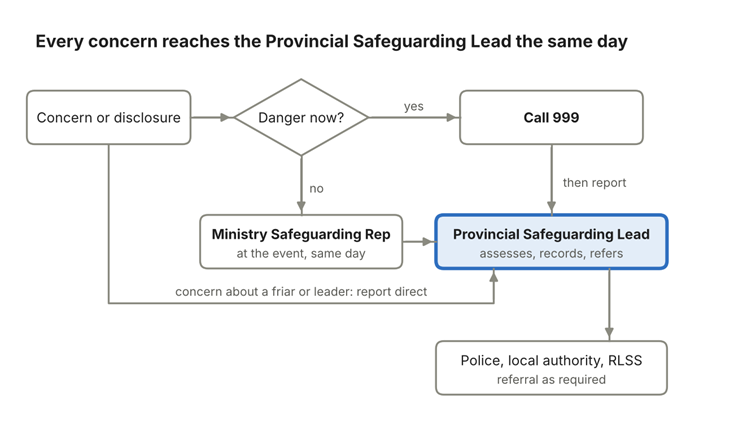
Figure 1. Reporting route for safeguarding concerns
Concerns about a friar or leader bypass the event team and go straight to the Provincial Safeguarding Lead.
11.1 When someone tells you
- Listen calmly, take it seriously, and let them speak in their own words. Do not investigate, question in detail or confront anyone.
- Reassure them they were right to tell you. Do not promise secrecy: explain that you may need to share what they have said with the safeguarding lead so they can be kept safe.
- Respect the adult’s wishes wherever possible. Talk with them about what they want to happen. Information is shared without consent only where someone is at risk of serious harm, others (especially children) may be at risk, a crime may have been committed, or a person in Church ministry is involved.
- Record what was said, in their words, with date, time, place and who was present, and sign it. Keep it secure and give it only to the safeguarding lead.
- Report the same day.
11.2 Allegations against friars, clergy, religious or leaders
Concerns about anyone in ministry, including a friar of this Province, go straight to the Provincial Safeguarding Lead and never only to the person’s superior or colleague. The Province follows RLSS and statutory procedures; the person concerned may be asked to step back from ministry while matters are looked into, without any presumption of guilt. Anyone may also report directly to the police, the local authority adult or children’s services, or the CSSA.
11.3 Support
We offer support to anyone who has been harmed, including signposting to independent services, and to those who raise concerns. No one who raises a concern in good faith will suffer any detriment.
12. Health, safety and emergencies
Every event has a first aider, a first aid kit, an emergency plan and a way to reach each participant’s emergency contact.
- Risk assessment for each activity, reviewed yearly for Living Flame and for each retreat and pilgrimage individually.
- Insurance: the Province’s public liability insurance is confirmed to cover each activity; travel insurance is required for pilgrimages.
- Medical needs: participants manage their own medication; leaders know of serious conditions (for example, severe allergies) only as the participant chooses to share for their safety.
- Accessibility: venues and itineraries are checked for access, and reasonable adjustments made.
- Incidents and accidents are recorded on the day and passed to the Coordinator; serious incidents are reported to the Provincial and, where required, to the Charity Commission as a serious incident.
- Missing person: if a participant cannot be found, leaders search agreed areas, try their phone, then inform the event lead; if not found within 30 minutes, or sooner if they are vulnerable, call the police.
13. Training, review and contacts
13.1 Training
| Who | Training | Refresh |
| All leaders and volunteers | Basic safeguarding (children and adults at risk), this policy, code of conduct | Every 3 years; policy briefing yearly |
| Coordinator and Ministry Safeguarding Representative | Safeguarding lead or designated person training via RLSS or equivalent | Every 2 years |
| Event leads for retreats and pilgrimages | Risk assessment, first aid, emergency procedures | Before first event; first aid every 3 years |
| Friars offering spiritual direction | Boundaries in pastoral ministry, spiritual abuse awareness | Every 3 years |
13.2 Monitoring and review
This policy is reviewed every year by the Coordinator with the Provincial Safeguarding Lead, and after any serious incident or change in Church or statutory guidance. Participants are invited to give feedback after each retreat and pilgrimage, including on whether they felt safe.
13.3 Contacts
The Province’s published UK safeguarding contacts are below (source). The page dates from 2022, so confirm them after the May 2026 Provincial Chapter before this policy is issued.
| Role | Name | Contact |
| Provincial Safeguarding Lead | Fr Thaddeus Ekuma, OCD | As published on the Province website |
| Safeguarding Lead, CACS and Carmelite Priory, Oxford | Fr Liam Finnerty, OCD | safeguarding.cacs@carmelite.org.uk |
| Young Adult Ministry Coordinator | Fr. Jerome Ituah, OCD | |
| Ministry Safeguarding Representative | Fr. Jerome Ituah, OCD | |
| Local Safeguarding Leads, Kensington and Gerrards Cross | Fr. Jerome Ituah, OCD and Fr. Theophilus Nyamali, OCD | |
| Emergency | Police, ambulance, fire | 999 |
| Non-emergency police | 101 | |
| Local authority adult and children’s services | Kensington and Chelsea, Oxfordshire, Buckinghamshire | Via each council’s website |
| Samaritans | 116 123 |
13.4 Appendices to prepare
- ☐ A: Leader code of conduct (signature form)
- ☐ B: Participant agreement
- ☐ C: Event booking and consent form (including photography)
- ☐ D: Risk assessment templates: Living Flame, retreat, pilgrimage
- ☐ E: Safeguarding concern record form
- ☐ F: Parental consent form for 16 and 17-year-olds
13.5 Approval
Approved by the Provincial on behalf of the Anglo-Irish Province: Fr. Jim Noonan, OCD
Date: October 19, 2026
Next review: October 19, 2027
Sources
- Discalced Carmelites Anglo-Irish Province, Safeguarding UK
- Discalced Carmelites Anglo-Irish Province, Safeguarding Ireland
- National Safeguarding Standards, Catholic Church in England and Wales
Religious Life Safeguarding Service, Independent Catholic News