The Discalced Carmelites

A story that began on a mountain.

Our story

From the mountain to the present.

Elijah was a prophet of the living God. On Mount Carmel he stood against the prophets of Baal and called Israel back to the Lord. The Carmelites take their name from that mountain, and their spirit from him.

What they keep from Elijah is not the fire that fell on the sacrifice. It is the silence that followed. Worn out and afraid, he fled into the desert, walked forty days, and hid in a cave on Mount Horeb. There the Lord told him to come out and stand before him. The Book of Kings tells what happened.

He said, “Go out and stand on the mountain before the Lord, for the Lord is about to pass by.” Now there was a great wind, so strong that it was splitting mountains and breaking rocks in pieces before the Lord, but the Lord was not in the wind; and after the wind an earthquake, but the Lord was not in the earthquake; and after the earthquake a fire, but the Lord was not in the fire; and after the fire a sound of sheer silence. When Elijah heard it, he wrapped his face in his mantle and went out and stood at the entrance of the cave.

1 Kings 19:11–13

Wind, earthquake, fire — and the Lord in none of them. Only afterwards, in a sound so thin it is nearly silence, does Elijah find him. That quiet is the beginning of Carmel. Prayer here is not noise and not display. It is standing before the living God, and meeting him when everything else has gone still.

Centuries later, hermits gathered on Mount Carmel to live in that same spirit: silence, solitude and prayer. Early in the thirteenth century St Albert, Patriarch of Jerusalem, gave them a Rule. It is a short formula of life: allegiance to Jesus Christ, a cell in which to ponder his law day and night, the psalms, poverty, and a small oratory in the midst of the cells. The charism is already there — prayer as a steady friendship with God, lived alone and yet together.

The mountain did not stay safe. Through the thirteenth century the hermits left Carmel for Cyprus, Sicily, England and the rest of Europe and the Rule was adapted so they could live as friars in towns. What they carried with them was the cell, the silence, and prayer at the centre.

In sixteenth-century Spain, St Teresa of Ávila and St John of the Cross called Carmel back to that first simplicity. Their reform — the Discalced, or “barefoot”, Carmelites — took up the primitive Rule again: a hidden life of prayer, poverty and friendship with God.

In the modern era that same life has been planted across the world. Friars, nuns and Secular Carmelites keep it inside ordinary days, including the friars of the Anglo-Irish Province in Britain and Ireland.

The charism was never the property of one century. What was true for Elijah is as true and as profitable now: God is not in the storm. He is found in the silence, and in prayer he is a friend. Many saints have walked that path and handed it on — among them doctors of the Church: Teresa of Ávila, John of the Cross and Thérèse of Lisieux. They are a large part of who we are today.

  1. 9th century BCElijah, and the silence
  2. Late 12th centuryHermits on Mount Carmel
  3. 1206–1214Rule of St Albert
  4. 1238–1291Leaving Mount Carmel
  5. 1562The Discalced reform
  6. 1926 · 1970 · 1997Doctors of the Church
  7. TodayThe same charism

Our charism

A gift for coming closer to God.

A charism is a gift of the Holy Spirit. It is given so that a particular way of following Christ can draw people closer to God, and, through them, draw others. It is not a style someone invents, and it is not private. The Church receives it and keeps it, because the gift was never meant for one person alone.

Ours is prayer as a real friendship with God. St Teresa of Ávila said prayer is nothing other than an intimate sharing between friends: time given to the one who loves us, to speak and to be silent, and to stay. That friendship is contemplative. It seeks God for his own sake, and it learns, as Elijah did, to find him in the silence rather than in the storm.

The Rule of St Albert already holds the whole of it: solitude and community belong together. Study, preaching, parishes and retreats come out of the prayer; they do not replace it. Friars, nuns and Secular Carmelites keep one charism in different forms of life. The same gift is there for anyone who wants to begin.

How we live

A day in the life.

The shape of the day is how Carmelites live the charism. Friendship with God is not saved for a spare hour. The hours themselves return to him: silence before anything else is asked, the Eucharist at the centre, work carried rather than allowed to take over, the community gathered, and the night handed back to silence.

What follows is the rhythm of a friars’ house. Nuns keep the same prayer in enclosure. Secular Carmelites keep it, as they can, in the middle of an ordinary day. The shape is one.

  1. Morning Silent prayer & Lauds Before any work, the brothers sit in silence. This is the charism itself: to be with God for his own sake. Lauds, the Church’s morning prayer, then sets the hours that follow inside the psalms.
  2. Morning Mass The Eucharist is the centre, not one appointment among others. Friendship with God is fed here. The rest of the day comes out of this and returns to it.
  3. Day Work & ministry Study, the parish, retreats, the work of the house. None of this is a break from prayer. It is the same friendship carried into what the brothers are given to do.
  4. Midday Midday prayer & lunch The community gathers. Carmel is not a set of private lives. The Rule put an oratory in the midst of the cells, and the table belongs with it: those who pray alone also eat, and belong, together.
  5. Evening Silent prayer & Vespers As the day draws in they return to the silence they began with. Vespers gathers the hours and hands them back.
  6. Evening Recreation Conversation and laughter are part of the life. Community is how the charism stays human, not a lapse from it.
  7. Night Compline Night prayer, then the great silence until morning. The house becomes again what the mountain was: a place to stand before God when everything else has gone still.

Those who are discerning consecrated life may visit our Vocations page to learn more.

Our houses

Where to find us.

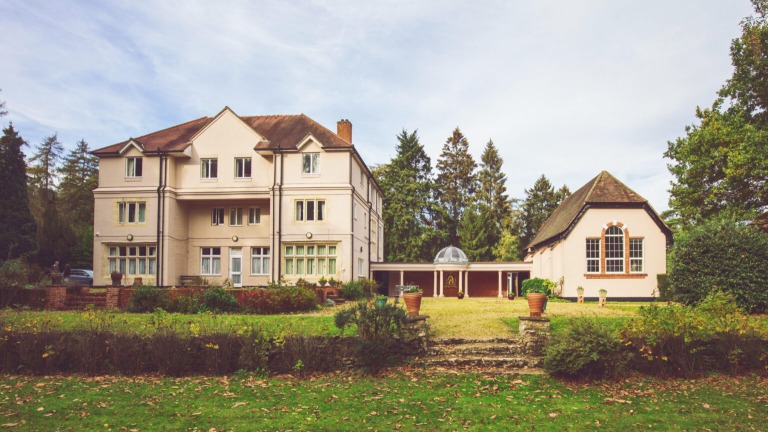
The priory and chapel at Boars Hill

Boars Hill, Oxford

Carmelite Priory, Chilswell Ln, Boars Hill, Cumnor, Oxford OX1 5HB

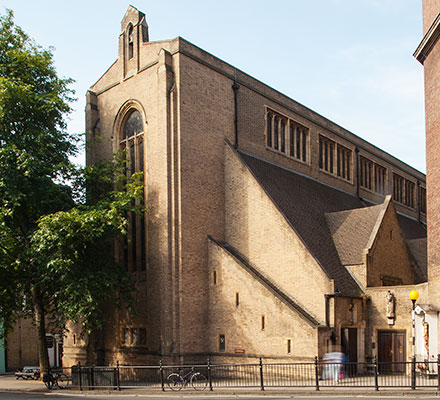
The church of Our Lady of Mount Carmel and St Simon Stock in Kensington

Kensington, London

Church of Our Lady of Mount Carmel and St Simon Stock, W8 4BB.

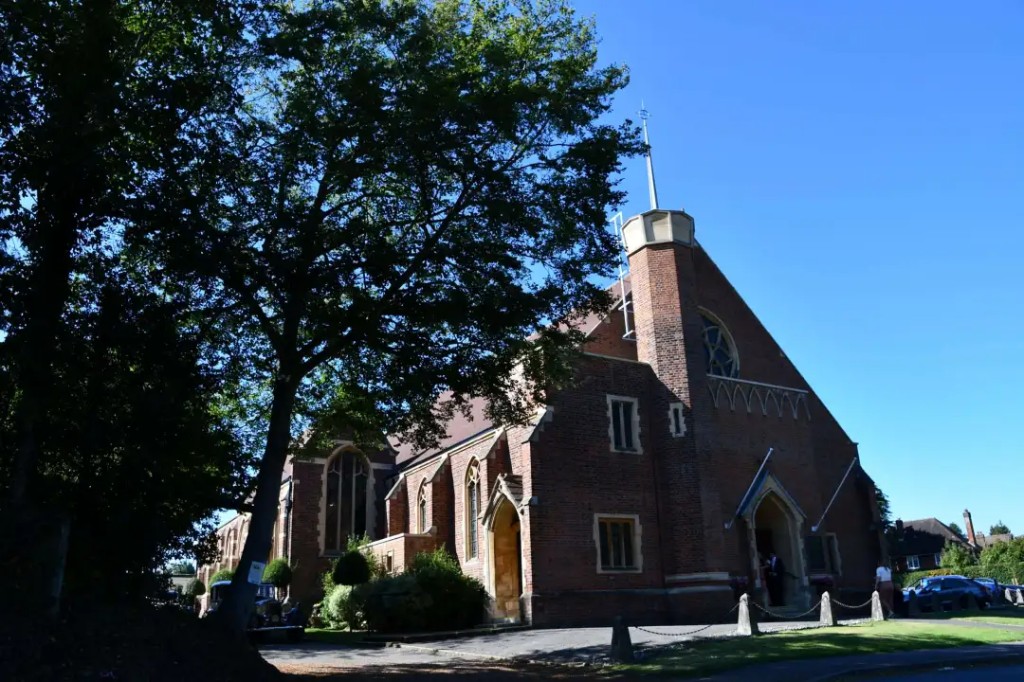
The church at Gerrards Cross

Gerrards Cross

Austenwood Common, Chalfont St Peter, Gerrards Cross, Buckinghamshire, SL9 8RY

A Carmelite house in Ireland

Ireland

[Houses of the Province in Ireland — to be added.] See ocd.ie.

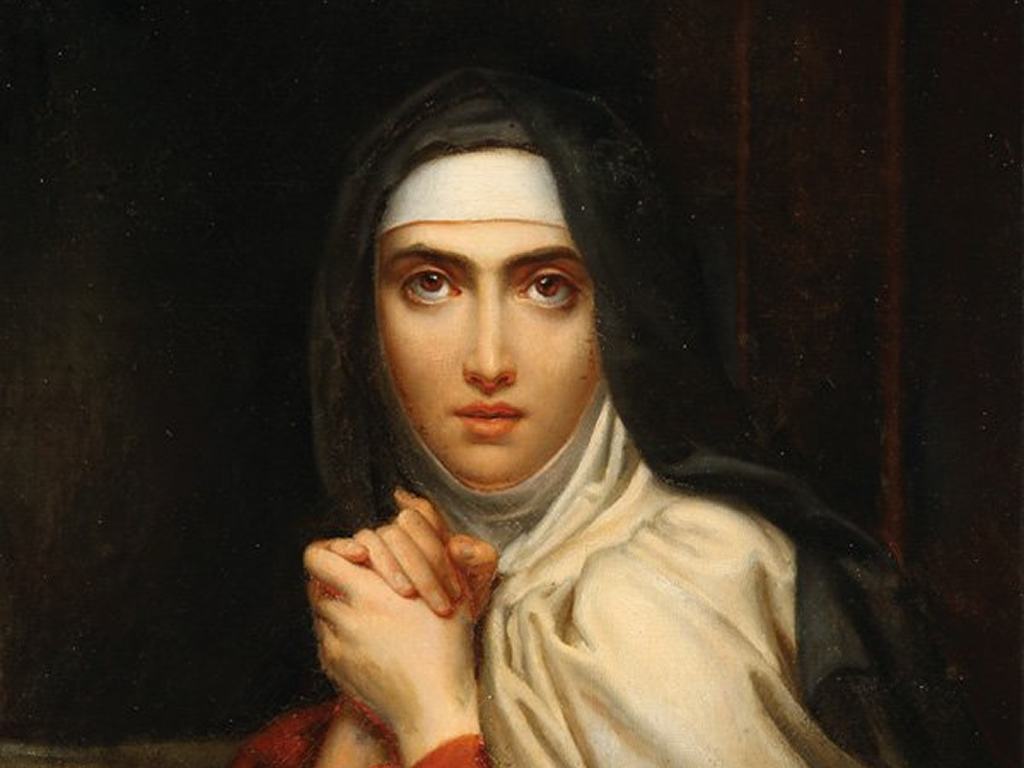
“Let nothing disturb you. God alone suffices.”
St Teresa of Ávila

Go deeper

Resource library

Talks, books, articles and downloads to help you pray and understand the faith.

Podcast◖ The Encounter Podcast Friars & young adults Conversations between friars and young adults about knowing God. It is Encounter’s own record of the charism as people actually speak of it. Listen if you want Carmel in ordinary voices before you open a classic. Listen ↗
Magazine§ Encounter Monthly Monthly word of wisdom A short reflection each month from the community, meant to keep the weeks from passing without prayer. Read it when you want one page that turns you back to God. Read ↗
Video series▶ Living Flame: The Spiritual Life Playlist Talks from the Living Flame groups, kept so anyone can hear them. They stay with Teresa, John and Thérèse, and with the real difficulty of trying to pray. Watch if you are starting, or if prayer has gone dry. Watch ↗
Video series▶ Living Flame: Community & Mental Health Playlist A series from the same groups on living with other people and with your own mind. Carmel has never treated the interior life as separate from being human. Watch if you want the tradition to speak to anxiety, friendship and ordinary pressure. Watch ↗
Video series▶ CACS talks Centre for Applied Carmelite Spirituality The Centre at Boars Hill exists so the tradition can be studied and prayed, not only admired. These are talks from the friars’ own house in Oxford. Watch if you want a slower account of Carmelite prayer than a short article can give. Watch ↗
Articles What is spiritual direction? Accompaniment Spiritual direction is an old Carmelite practice: someone further along helps you notice what God is doing in your life. This piece says what it is, and what it is not. Read it if you are wondering whether to ask for accompaniment. Read ↗
Articles Guided silent retreats Oxford or online An individually guided retreat is how many people first spend real time in Carmelite silence, at Oxford or online. A director meets you; the rest is prayer. Read this if a single day away is not enough and you want to know what a longer silence asks. Read ↗
Articles The Little Way of St Thérèse Article Thérèse of Lisieux, a Carmelite who died at twenty-four and was later named a doctor of the Church, taught that holiness is small: trust, hidden love, the next duty. Read this if the great books feel far off and you need a way of praying that fits an ordinary day. Read ↗
Books❦ The Interior Castle St Teresa of Ávila Teresa wrote this near the end of her life, for her nuns, as a map of prayer: the soul as a castle of many rooms, with God at the centre. It is the book that taught Carmel to speak of prayer as a journey inward. Read it if you want the charism in the reformer’s own words. Read ↗
Books❦ Story of a Soul St Thérèse of Lisieux Thérèse wrote this under obedience, for her sisters, not as a monument. That is why it still reaches people: a hidden life, simply offered, which the Church later recognised as a doctor’s teaching. Read it to see what the Little Way looks like from the inside. Read ↗
Books❦ The Dark Night St John of the Cross John of the Cross wrote this to describe what happens when God draws a person beyond feelings and ideas into a simpler union. It is demanding, and it has steadied people who thought they had lost prayer. Read it when silence feels empty and you need to know that emptiness can be the way. Read ↗
Downloads↓ God Alone Suffices Discernment booklet · PDF A short booklet from the Province on vocation: how to listen for a call, to Carmel or elsewhere, without forcing an answer. The title is Teresa’s. Download it if that question is already with you and you want something to read slowly, on your own. Download ↓